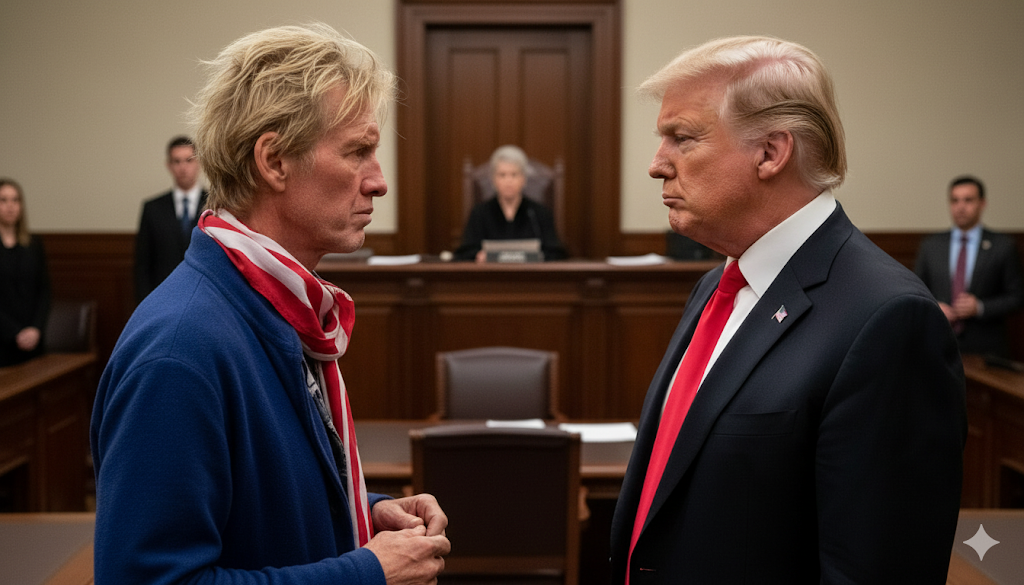
Trial begins for Ryan Routh charged with attempting to assassinate Trump
I’m Antony Locke, reporting for AntonyLocke.com — Jury selection opens in Fort Pierce after a year of filings and delays. Here’s what the government alleges, why the case is unusual, and what to watch inside Judge Aileen Cannon’s courtroom.
I’m Antony Locke, reporting for AntonyLocke.com — and the mood in Fort Pierce this morning is taut. After a year of filings, postponements and procedural skirmishes, the federal trial of Ryan Wesley Routh — the man accused of attempting to assassinate Donald Trump at his Florida golf course in September 2024 — is finally under way. Jury selection starts with a systematic procedure that will decide who hears one of the most high-profile criminal cases of the year.
What the government alleges
Prosecutors say Routh, 59, travelled before dawn to the perimeter of Trump International Golf Club, West Palm Beach on 15 September 2024, waited for hours, and then aimed a rifle through a fence line as Trump advanced on a nearby hole. A U.S. Secret Service agent on a sweep spotted the weapon and fired; Routh fled, and authorities recovered a rifle he allegedly dropped. Crucially, no shot struck Trump; the former president was hustled from the course under established protective protocols. The government frames this as an attempted assassination of a major presidential candidate, an assault on a federal officer, and a series of firearms offences that together could mean lengthy prison time if a jury convicts.
The charges at a glance
Routh has pleaded not guilty to multiple counts, including:
- Attempted assassination of a major presidential candidate;
- Assaulting a federal officer (the Secret Service agent who spotted him);
- Possessing a firearm in furtherance of a crime of violence;
- Being a felon in possession of a firearm and ammunition;
- Possession of a firearm with an obliterated serial number.
In plain English: prosecutors will try to prove not just that Routh possessed a weapon, but that he intended to use it to kill Trump and took substantial steps towards that aim.
The courtroom dynamics: Routh is going it alone
The trial’s tempo will be shaped by Routh’s choice to represent himself. His former lawyers remain as standby counsel, but he plans to examine witnesses, argue motions and address jurors in his own words. Self-representation is a constitutional right; it’s also a high-risk strategy in a case that turns on technical criminal law, forensic evidence and national-security-adjacent procedures. The judge has already pared back some of Routh’s proposed juror questions as irrelevant, but allowed enough leeway to probe media exposure, politics and attitudes to protest and gun ownership.
Who’s on the bench — and why it matters
U.S. District Judge Aileen Cannon is presiding. Her name will be familiar from the separate classified-documents case. That baggage will hover at the edges even as she emphasises neutrality. Practically, the focal points will be her evidentiary rulings — what gets in, what stays out — and how tightly she manages a pro se defendant inclined to steer into political argument.
What to expect in jury selection
The court has set aside several days to seat twelve jurors plus alternates. Both sides are chasing the same quality — open-mindedness — from different angles. The defence wants people willing to look past headlines and weigh that no shot was fired and that intent is hard to prove beyond reasonable doubt. The prosecution wants jurors who accept that attempt doesn’t require a trigger pull, only a purposeful move toward the act, and who won’t be swayed by strong views about Trump.
The questionnaire typically probes media use, civic engagement, gun familiarity, and ties to law enforcement or political campaigns. Expect challenges for cause wherever answers hint at deeply held pro- or anti-Trump views that would undercut impartiality.
The evidence in play
Watch for prosecutors to build a chain roughly like this:
- Presence & preparation — surveillance, phone records, vehicle data and witnesses placing Routh near the course for hours;
- The weapon — the rifle recovered at or near the scene, ballistics work, and any evidence of an obliterated serial number;
- Intent — statements before/after the incident, writings or posts prosecutors say point to motive;
- Confrontation & flight — the Secret Service account of spotting the rifle, return of fire, and Routh’s departure;
- Recovery & arrest — tracking and detention, plus any forensic tie-backs (prints, fibres, gunshot residue — complicated here because no shot was fired).
The defence is likely to hammer three themes: no gunshot and no viable line of fire; rhetoric rather than intent; and prosecutors over-reading ambiguity through a political lens. Because Routh is self-represented, his questioning may range wider than a seasoned counsel’s — sometimes muddying the narrative, sometimes stumbling into useful doubt.
Why this case is different from Butler, Pennsylvania
Everyone remembers Butler — the July 2024 rally shooting in Pennsylvania that wounded Trump and killed a spectator. That was a completed attack with a deceased assailant. This Florida golf-course case is about prevention and attempt. Legally, the distinction matters: jurors must decide whether Routh’s conduct crossed the line from preparation into perpetration, even without a trigger pull. Both sides will teach the panel the law of attempt and the meaning of “substantial steps”.
Security, politics and the wider stakes
Two things are already true. First, the case has intensified bipartisan pressure to bolster protective resources around presidential candidates. Second, the outcome will influence how courts read politically charged threats in the digital age: when do rhetoric, reconnaissance and a rifle in the hedgerow combine into a crime so grave that life imprisonment is on the table?
In the background, two narratives hum. One says the system worked: threat identified, attack thwarted, case brought, jury empanelled. The other warns against criminalising speech and inference when the worst never happened. The law does not, and should not, wait for a bullet — but every ruling here will be read through a partisan prism, given a self-represented defendant and a judge already famous from another Trump case.
My read on day one
The prosecution is organised and restrained; they don’t need theatrics because, if believed, the facts are dramatic enough. The defence is a wild card because Routh is his own advocate. Keep questions tight and he might plant reasonable doubt around intent and capability; veer into ideology or conspiracy and he risks alienating jurors determined to be fair.
Fort Pierce is now the stage. The next 72 hours will reveal which jurors both sides will accept, which evidence Judge Cannon keeps out, and whether Routh can discipline himself to act like counsel rather than a man with something to prove. I’ll stay on the filings and in the room where possible, and I’ll update as opening statements firm up later in the week.
FAQs
Has the trial officially begun?
Yes. Proceedings opened in Fort Pierce with jury selection following a year of filings and delays.
Was Donald Trump injured in the Florida incident?
No. No shot struck Trump. Agents moved him off the course under established protective protocols.
What charges does Ryan Routh face?
Counts include attempted assassination of a major presidential candidate, assaulting a federal officer, firearms offences (including possession in furtherance of a crime of violence), felon-in-possession, and an obliterated serial number charge.
Who is the judge?
U.S. District Judge Aileen Cannon is presiding. Her evidentiary rulings and case management will be pivotal.
Why is this different from the Butler, Pennsylvania shooting?
Butler was a completed attack with a deceased assailant. The Florida case centres on prevention and attempt — whether Routh took substantial steps toward the crime without a trigger pull.
Can Routh represent himself?
Yes. He is proceeding pro se with former counsel as standby, a lawful but high-risk strategy in a complex federal case.